
How to Set Up Proxies for Multilogin
With the combination of trustworthy proxies and Multilogin, the chances of maintaining stable access, for example, scraping the required public data are very high. This guide explains how to pair Multilogin with Oxylabs proxies.


What is Multilogin?
Multilogin is a reliable market-leading solution allowing you to build virtual browser profiles hassle-free. When combined with proxies, virtual browsing profiles allow you to hide digital fingerprints and efficiently manage multiple online accounts with a single device.
How to use a proxy in Multilogin?
Multilogin offers its proxies as well as integration with your own proxies. However, to get the best results, you should learn how to integrate Oxylabs proxies with Multilogin. Here's a step-by-step guide on how to do that.
Prerequisites
A Multilogin account: Use the desktop app or the web app at app.multilogin.com. The steps are the same in both.
An Oxylabs account: Create one in the Oxylabs dashboard and note its username and password.
Step 1: Log in to Multilogin and create a profile
Go to the Multilogin official website, log in, and on the Profiles screen, make sure the Browser tab is selected in the left panel, then click + Create in the top toolbar.
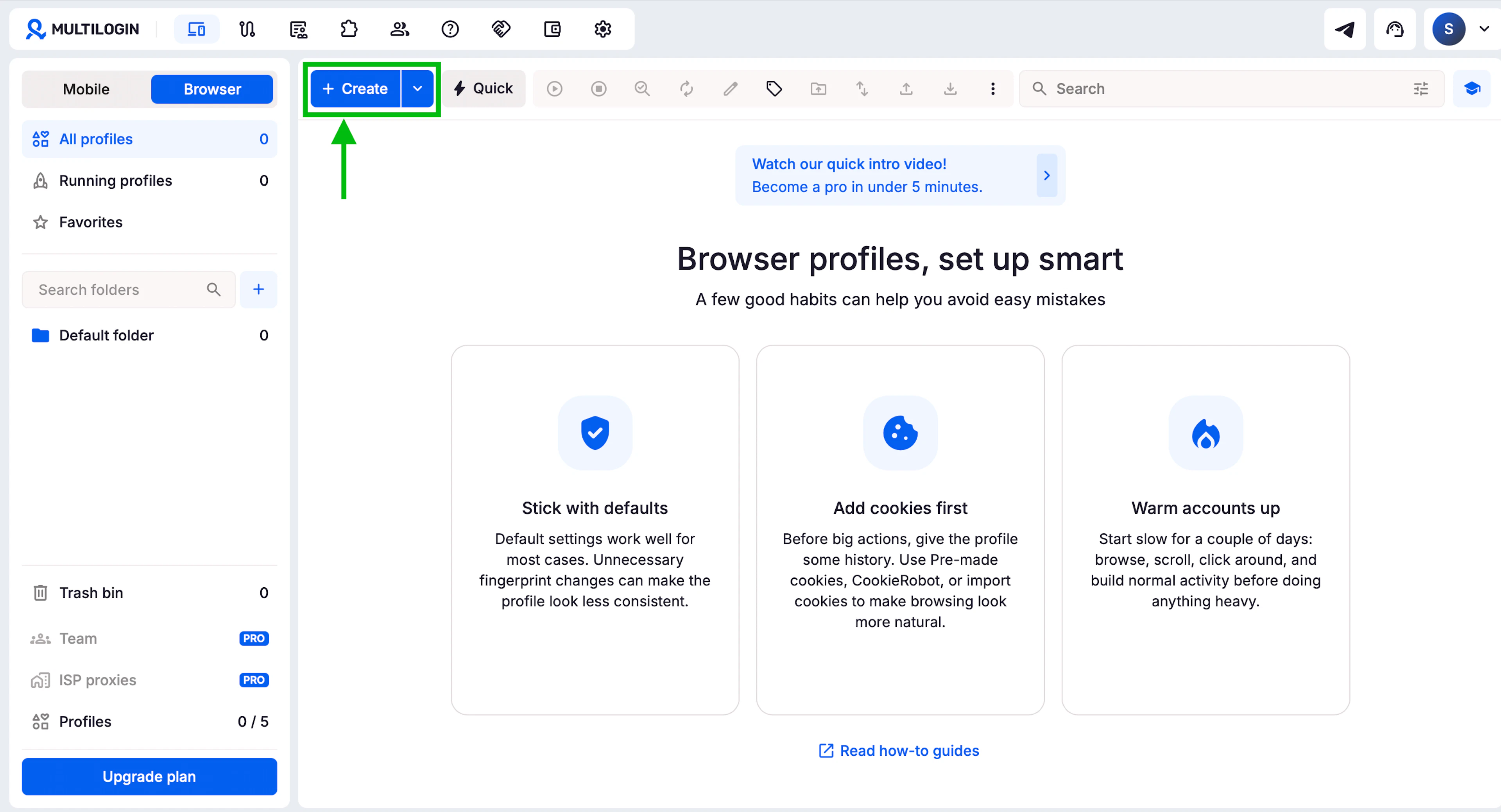
Step 2: Set up the profile
On the General tab, enter the profile name. The default operating system and browser settings can stay as is.
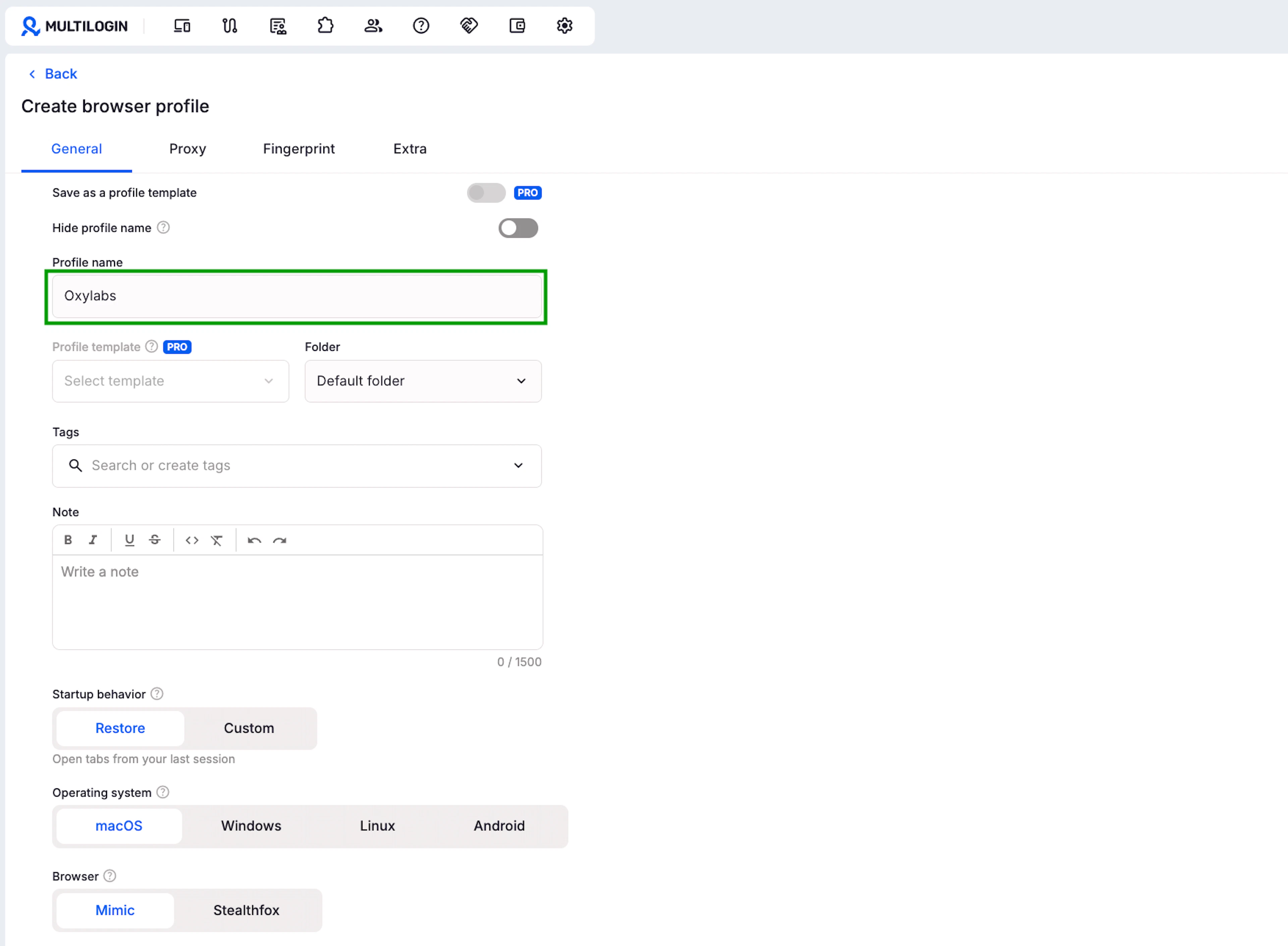
Step 3: Add a new proxy
Open the Proxy tab, select Custom, and choose a proxy protocol: HTTP, HTTPS or SOCKS5 (HTTPS is available only for some proxy types).
Then enter your proxy details in the following form:
ip:port:username:password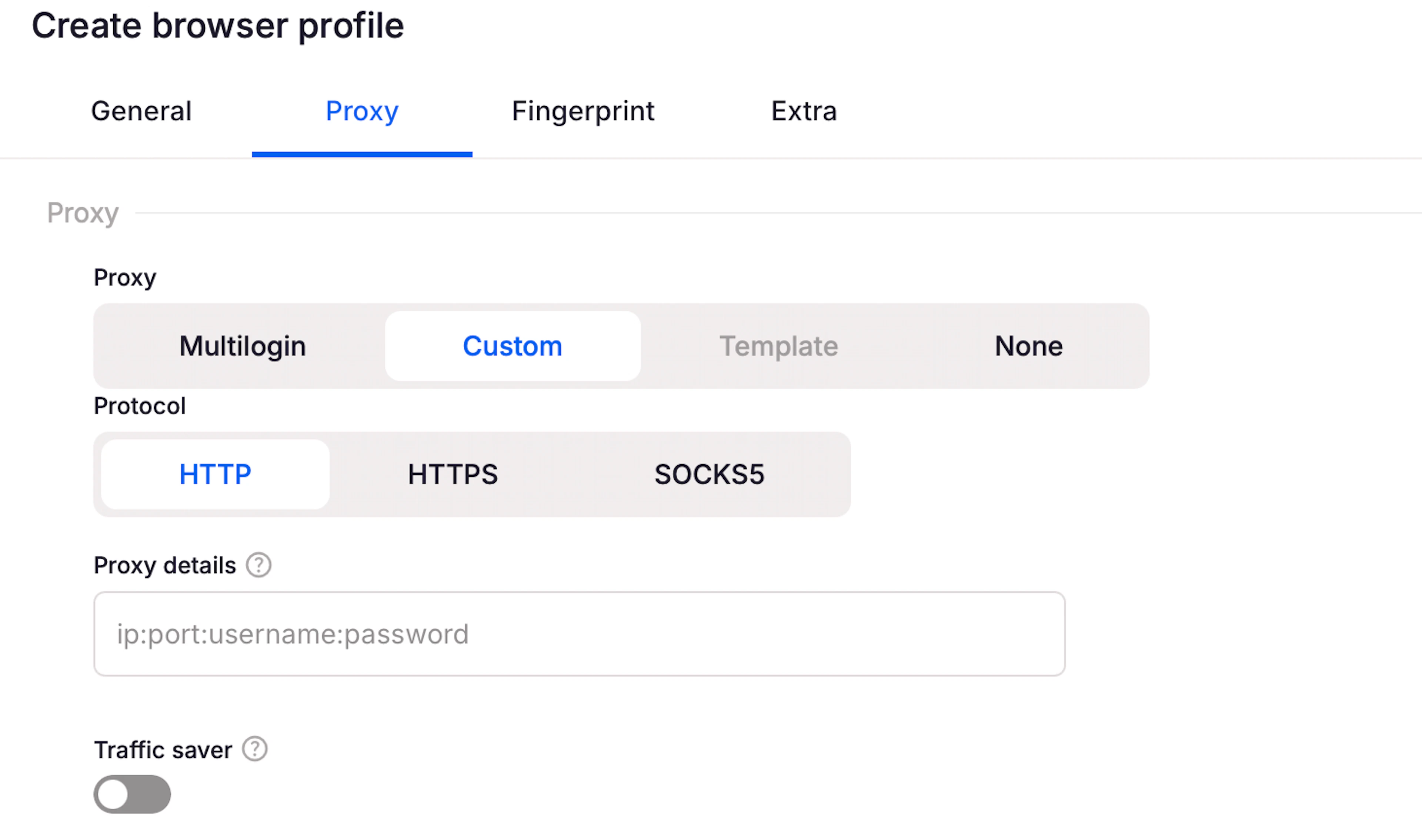
The general process is the same for Oxylabs Residential, Datacenter Proxies, and other proxy types.
To specify which proxies you want to use, adjust your proxy details according to any of the proxy types listed below.
Residential and Mobile Proxies
Protocol: HTTP, HTTPS, or SOCKS5
Host: pr.oxylabs.io
Port: 7777
Note: Add customer- to your username.
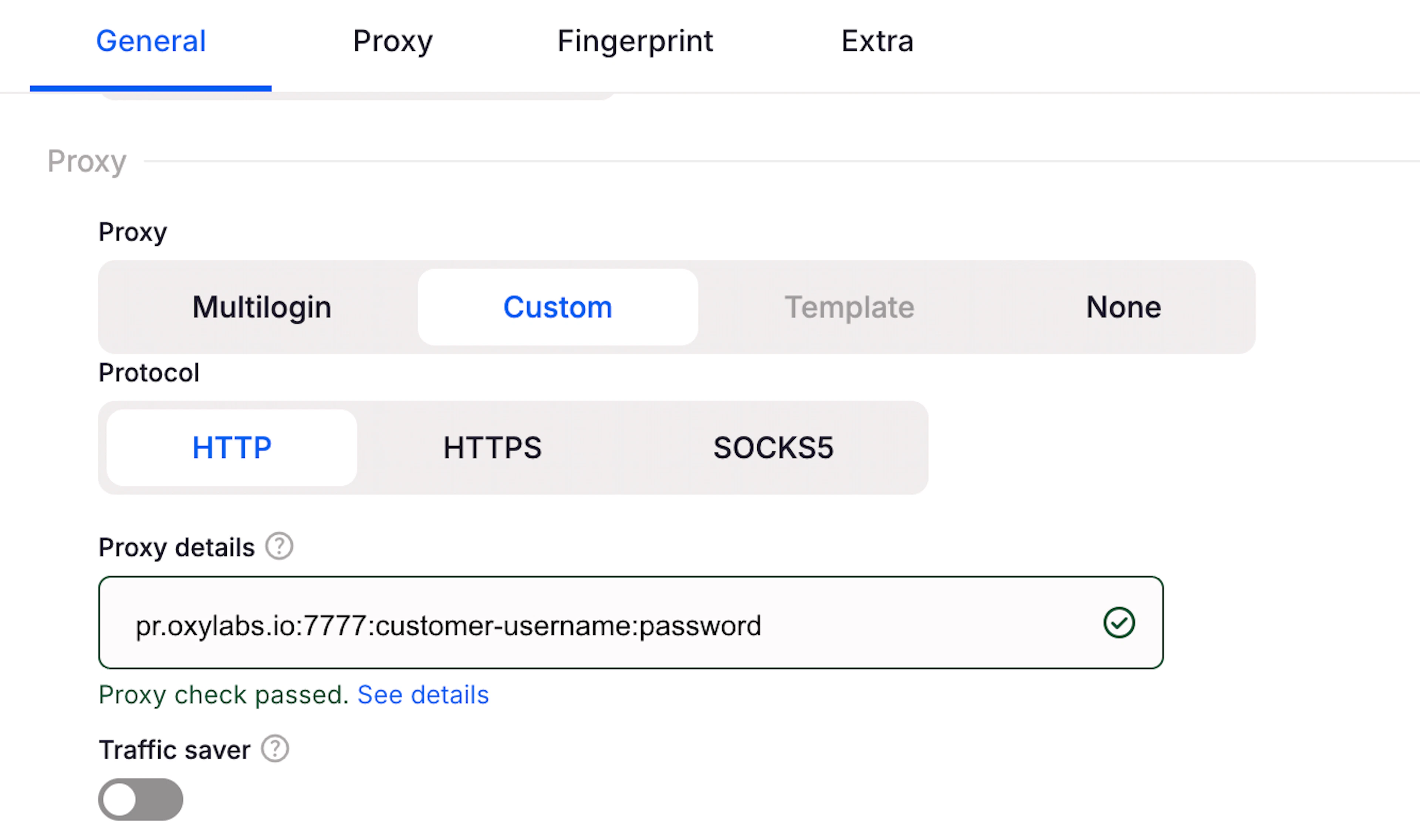
You can also use additional parameters to set the geo-location (country, city, state, etc.) and session control of your residential proxies.
| Proxy parameter | example | Protocols |
|---|---|---|
| Country entry node |
Host: //us-pr.oxylabs.ioPort: 10000 |
HTTP, HTTPS |
| Country |
User: customer-username-cc-US |
HTTP, HTTPS, SOCKS5 |
| State |
User: customer-username-st-US_texas |
HTTP, HTTPS, SOCKS5 |
| City |
User: customer-username-city-paris |
HTTP, HTTPS, SOCKS5 |
| Continent |
User: customer-username-cn-NA |
HTTP, HTTPS, SOCKS5 |
| Postal code |
User: customer-username-cc-US-postalcode-90210 |
HTTP, HTTPS, SOCKS5 |
| ASN targeting |
User: customer-username-ASN-21928 |
HTTP, HTTPS SOCKS5 |
| Session |
User: customer-username-sessid-qwerty123-sesstime-30 |
HTTP, HTTPS, SOCKS5 |
| Sticky session |
Host: //us-pr.oxylabs.ioPort: 10001 |
HTTP, HTTPS |
Enterprise Dedicated Datacenter Proxies
Protocol: HTTP or SOCKS5
Host: 1.2.3.4 (IP address from your proxy list)
Port: 60000 (HTTP) or 1180 (SOCKS5)
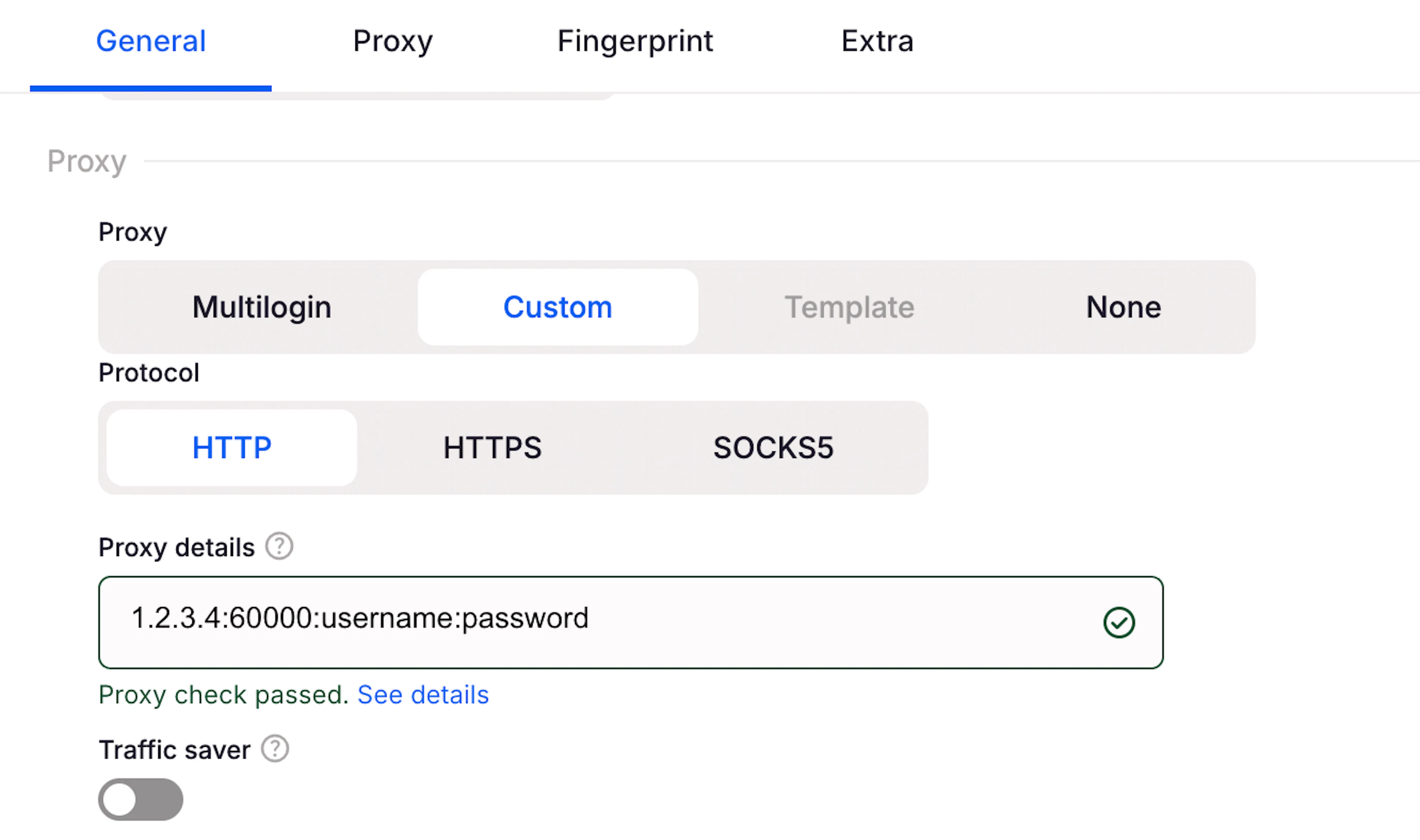
For Enterprise Dedicated Datacenter Proxies, you’ll have to choose an IP address from the acquired list. Visit our documentation for more details.
Self-Service Dedicated Datacenter Proxies
Protocol: HTTP, HTTPS, or SOCKS5
Host: ddc.oxylabs.io
Port: 8001
Note: Add user- to your username.
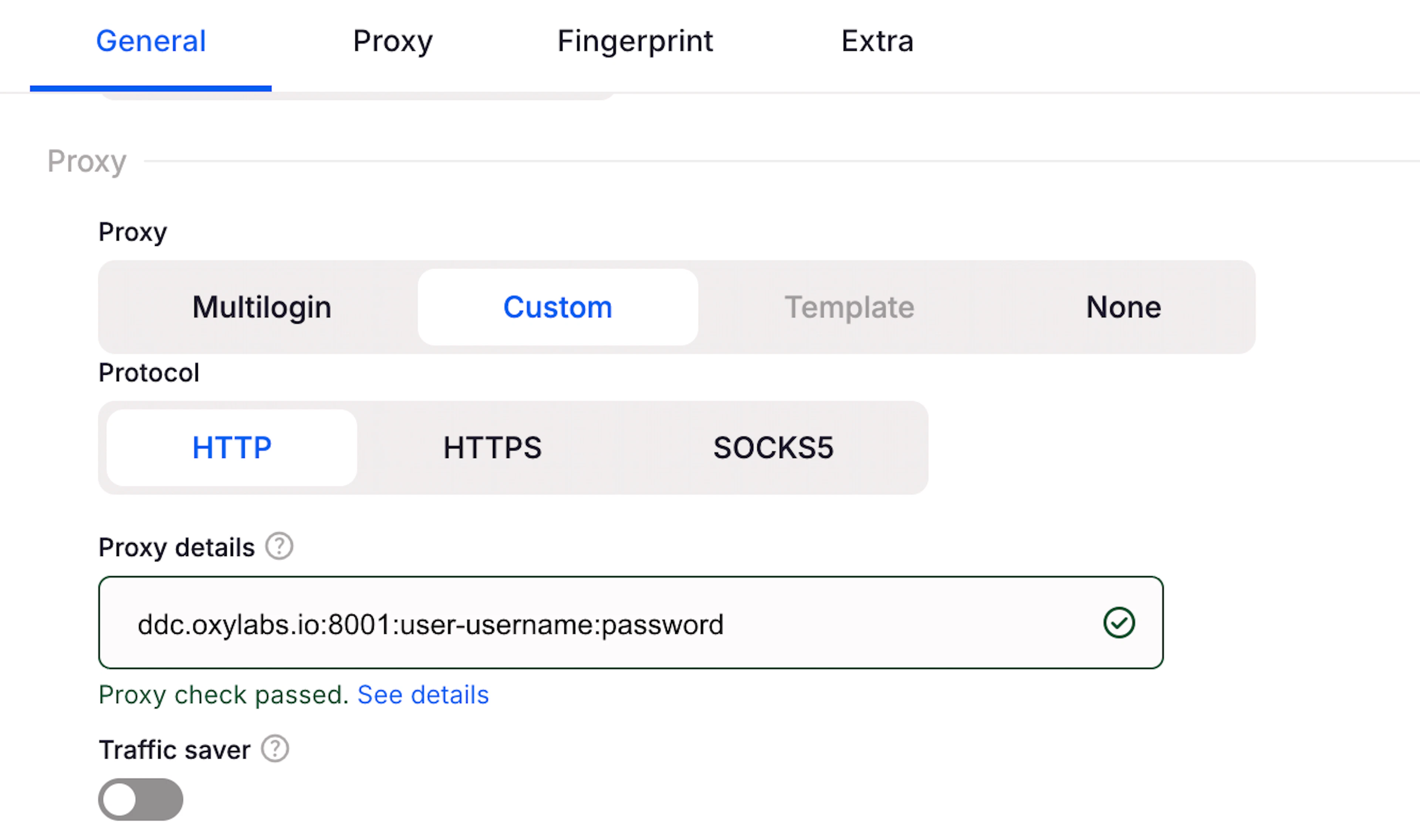
For Self-Service Dedicated Datacenter Proxies, the port indicates the sequential number of an IP address from the acquired proxy list.
If you want to get a different IP with each request, change the Port to 8000 to enable proxy rotation. Check our self-service documentation for more details.
Datacenter Proxies
Protocol: HTTP or SOCKS5
Host: dc.oxylabs.io
Port: 8001
Note: Add user- to your username.
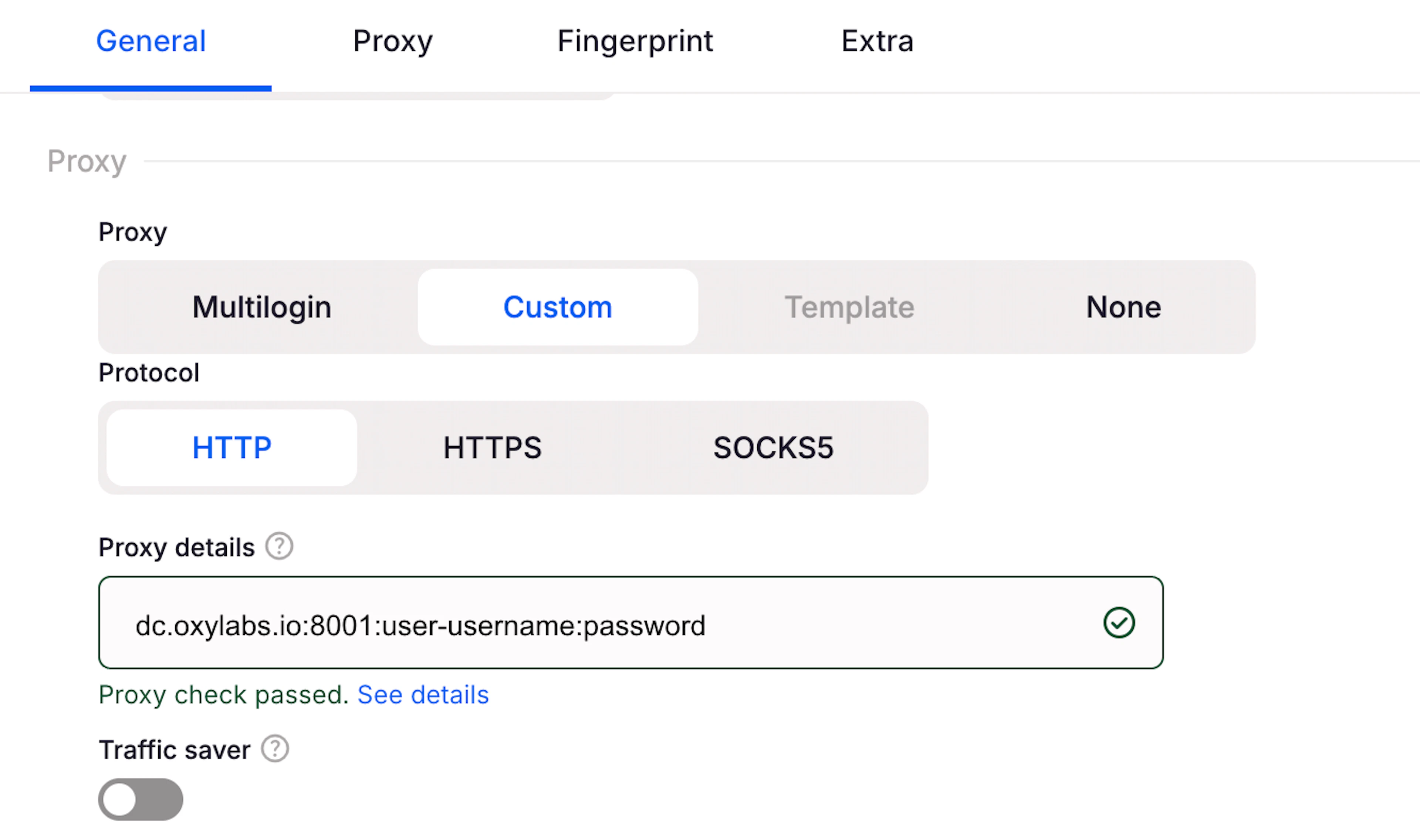
Pay-per-IP subscription
The port is the sequential number assigned to an IP address from the proxy list. Thus, port 8001 uses the first IP address from your list. You may also enable proxy IP rotation by setting the port to 8000.
Furthermore, you can specify the geo-location, for example, the US, by setting the Proxy username to user-USERNAME-country-US.
Pay-per-traffic subscription
Port 8001 picks a random IP address but stays consistent during a session. Alternatively, you can rotate proxy IPs with each request by using port 8000.
You can also specify geo-location, for example, the US, by setting the Proxy username to user-USERNAME-country-US.
ISP Proxies
Protocol: HTTP or SOCKS5
Host: isp.oxylabs.io
Port: 8001
Note: Add user- to your username.
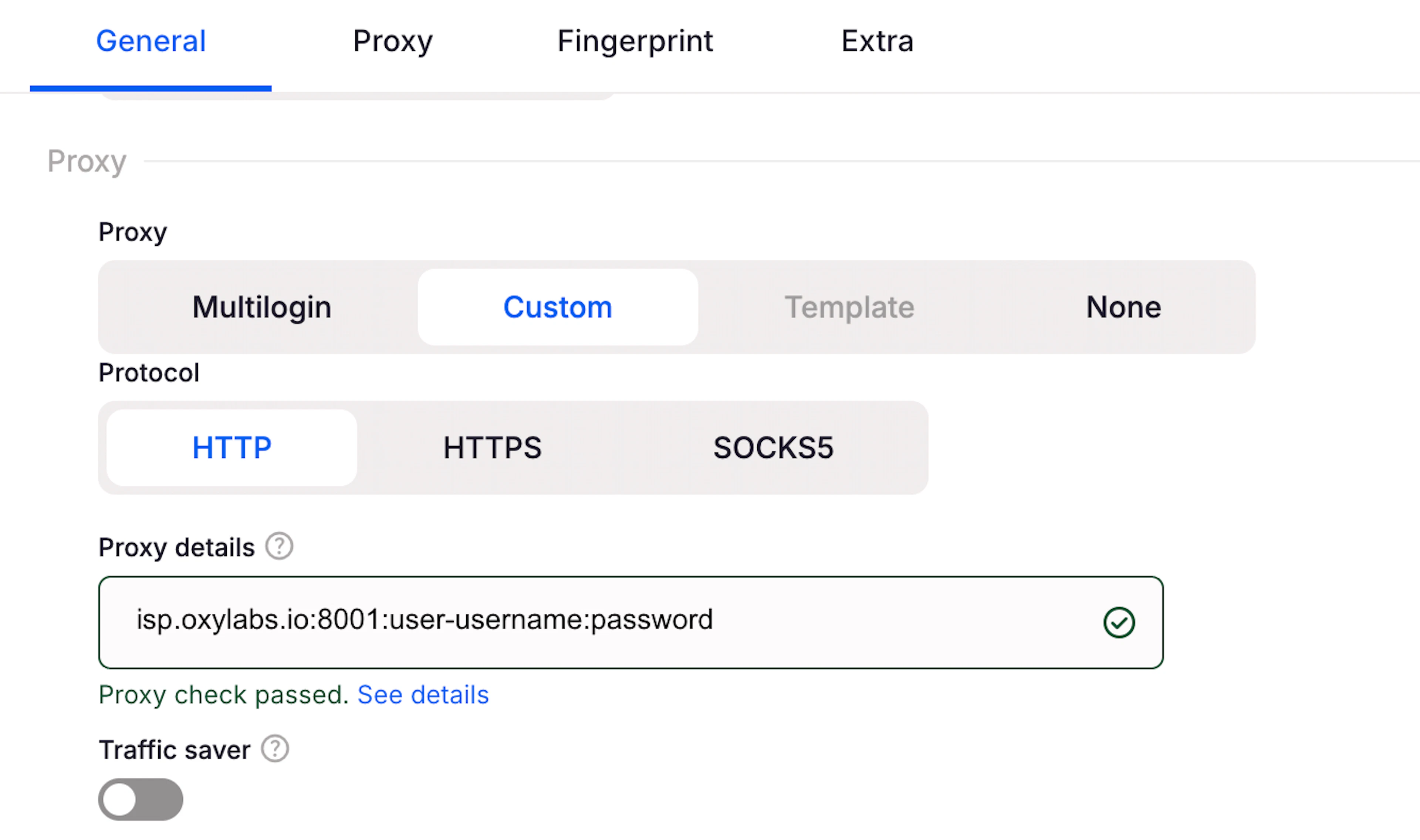
With ISP Proxies, the port is assigned to a specific IP address and its location. Hence, port 8001 will always pick the first IP from your proxy list.
Dedicated ISP Proxies
Protocol: HTTP, HTTPS or SOCKS5
Host: disp.oxylabs.io
Port: 8001
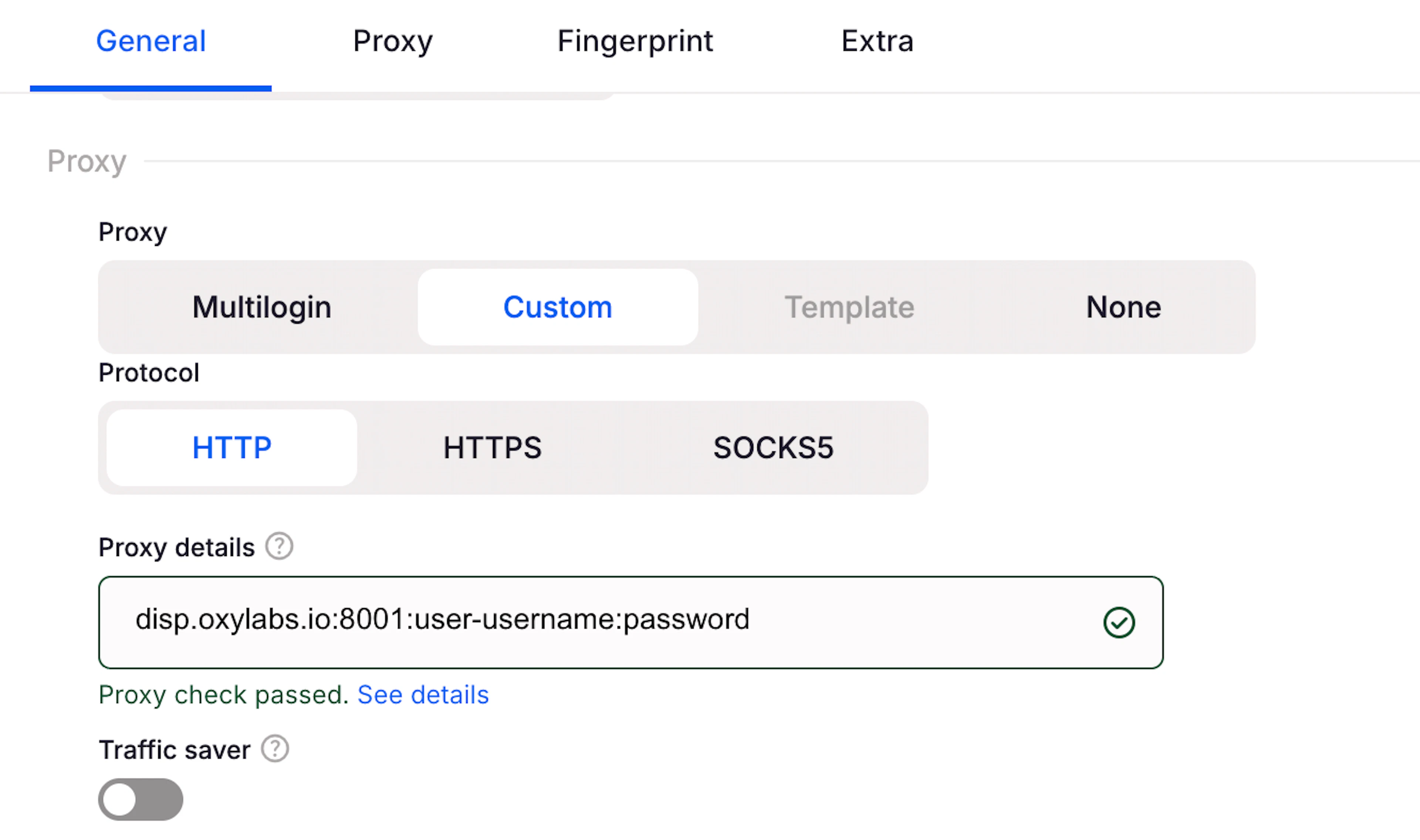
If you want to get a different IP with each request, change the Port to 8000 to enable proxy rotation.
Step 4: Enter user credentials
Enter your Oxylabs proxy user’s credentials. Use the same username and password you entered to create a new proxy user in the Oxylabs dashboard.
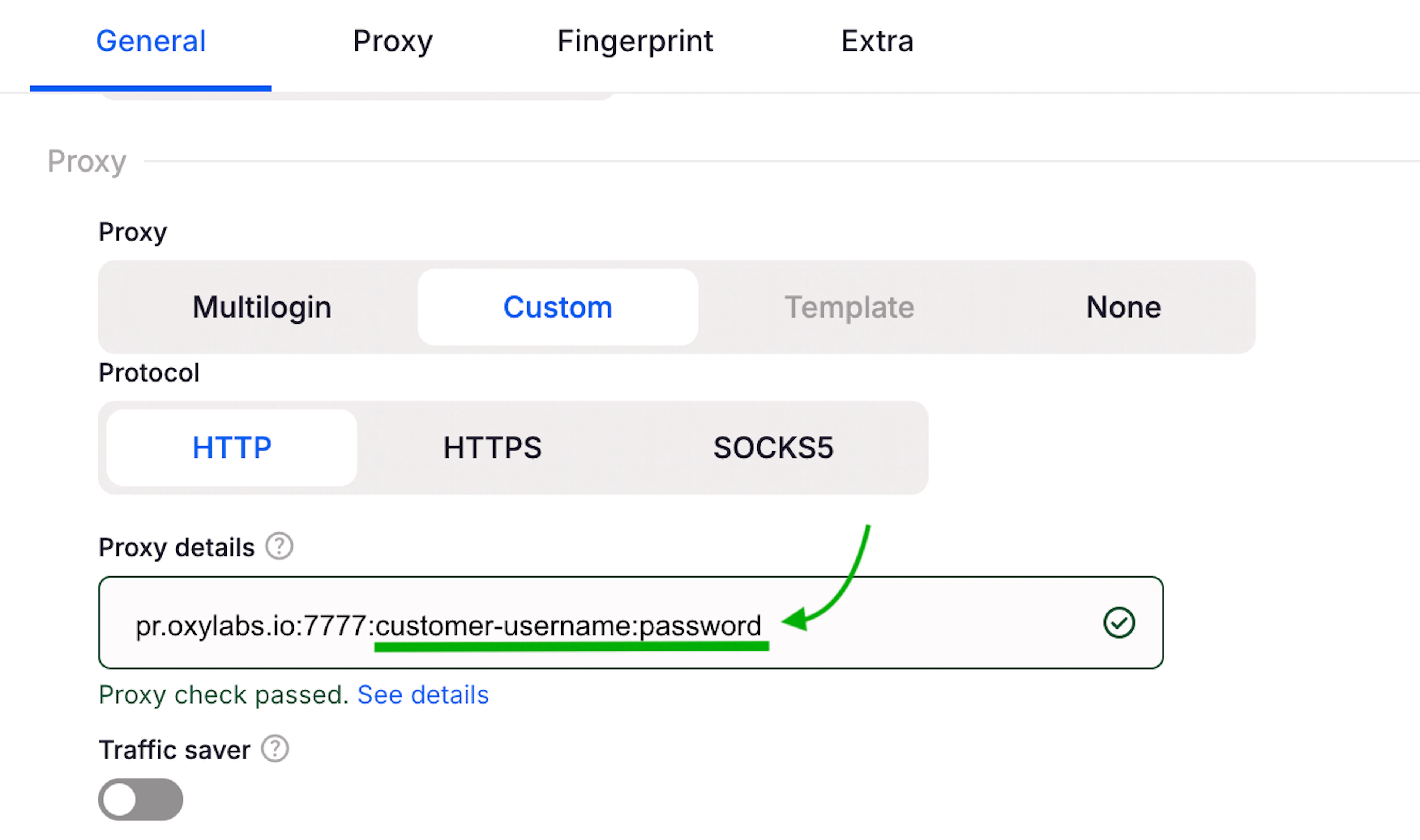
Note: Include user- or customer- prefix to your username if your proxy requires it (see Step 3).
Step 5: Finish the profile
If you need to use specific browser fingerprint options, such as user agent, cookies, and device settings, toggle Advanced mode at the top of the screen. Otherwise, you can finalize your new profile by clicking the Create button at the bottom of the screen.
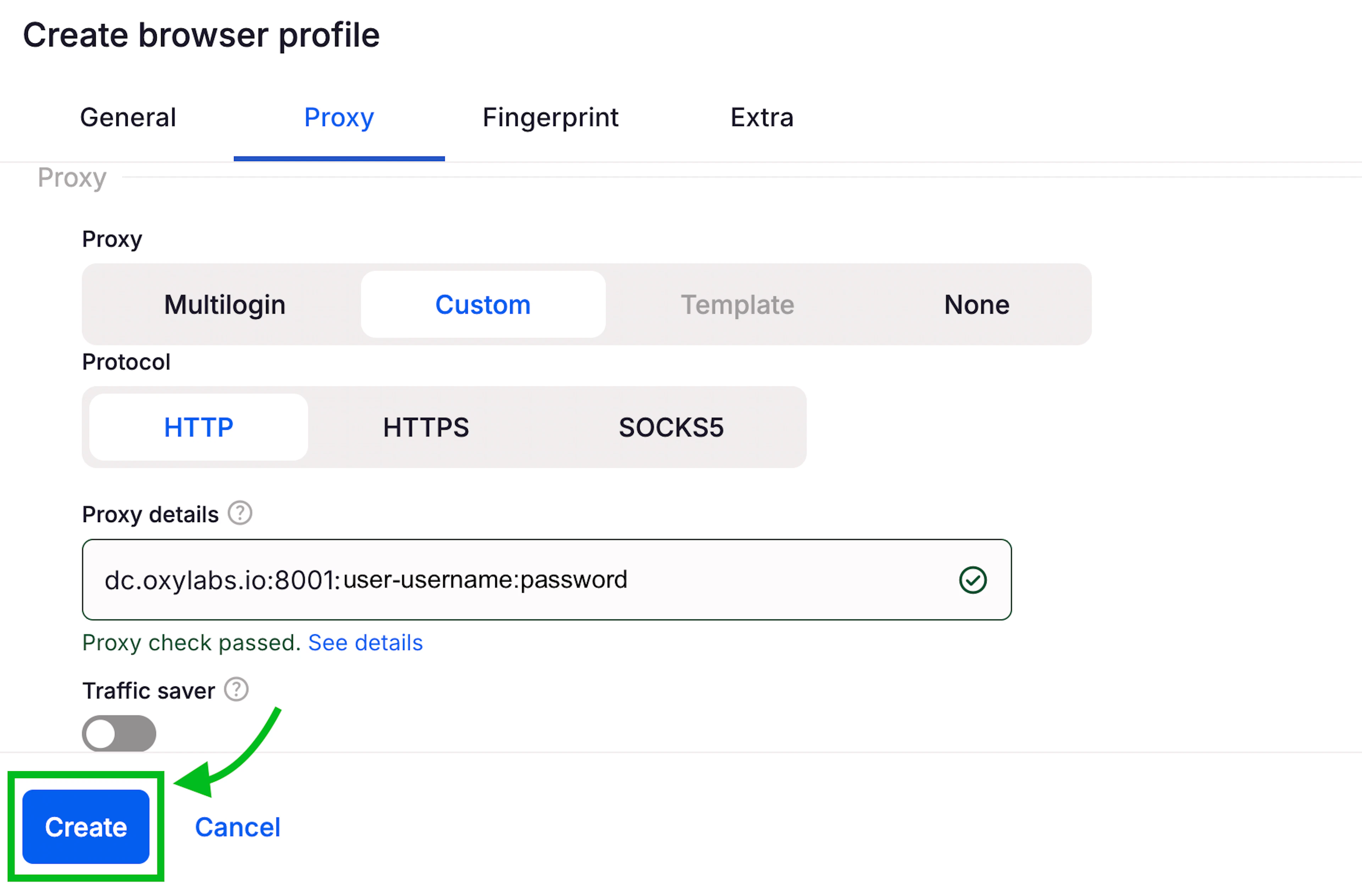
Step 6: Run new profile
Press the play button on your profile in the main screen to launch a newly created profile and carry on with your tasks in a private browser.
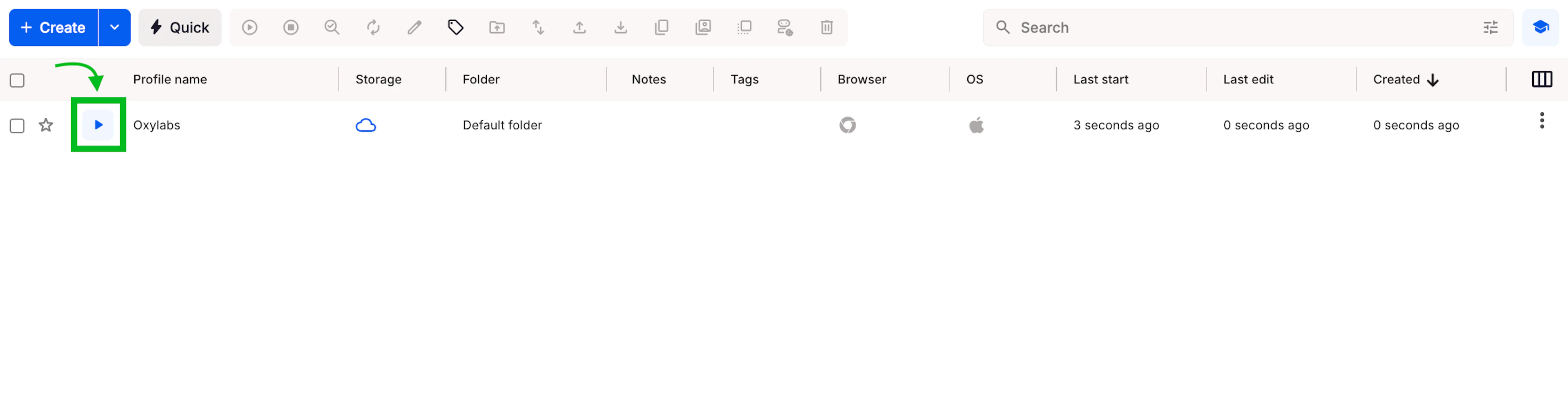
If everything is done correctly, https://whoerip.com/multilogin/ will open to show your new IP and all custom fingerprint information below.
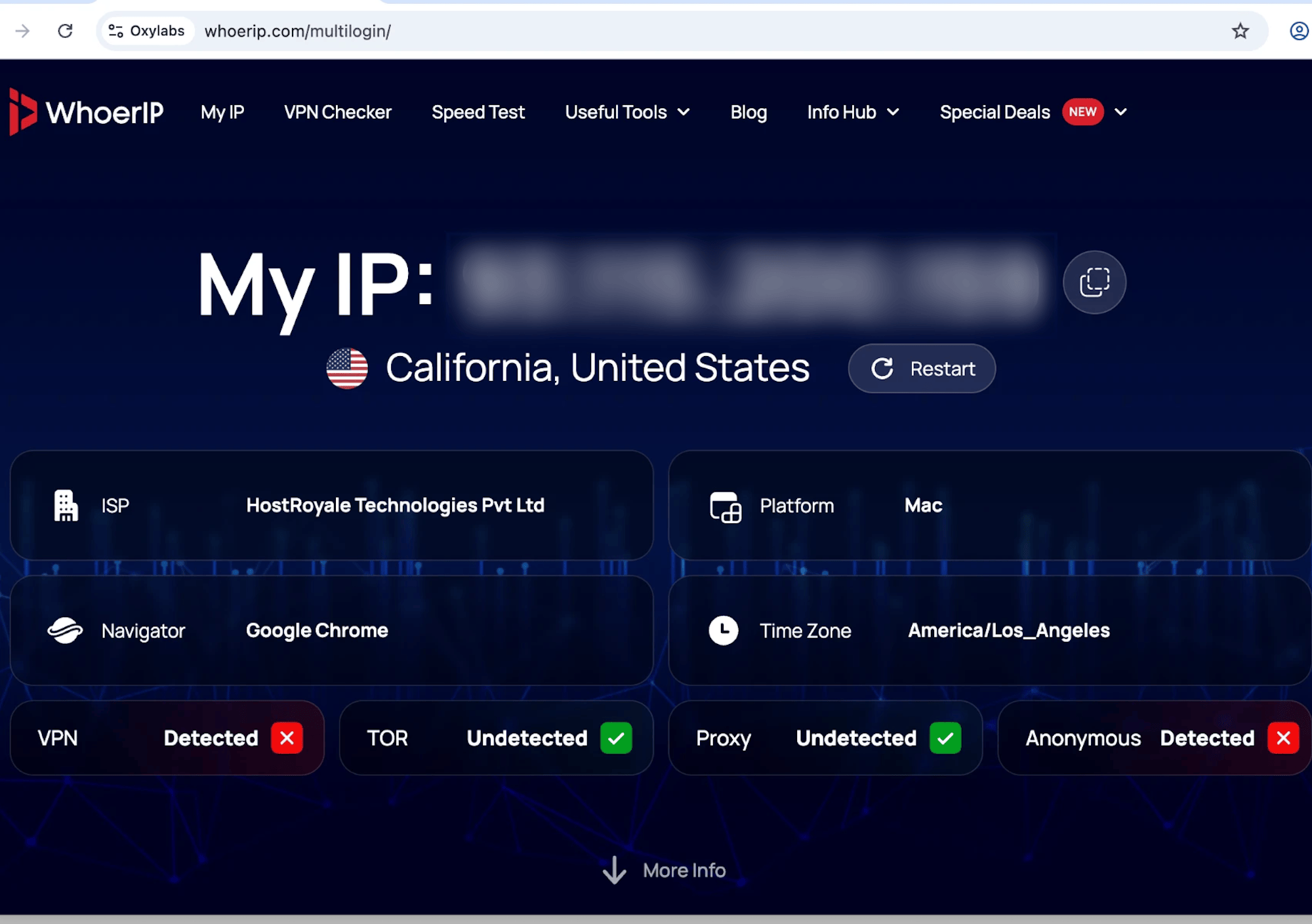
And that’s it. You’ve successfully integrated your Oxylabs proxies with Multilogin.
Final word
If you need to manage your native browser fingerprints, whether it is a case of web scraping in Python or personal use, Multilogin is a great app to do it with. Just make sure you choose good quality proxies to make your browsing fingerprint free.
If you have any questions regarding how to set up your proxies with Multilogin or any other proxy management tool, be sure to contact us at support@oxylabs.io, and we’ll answer your questions right away.
Please be aware that this is a third-party tool not owned or controlled by Oxylabs. Each third-party provider is responsible for its own software and services. Consequently, Oxylabs will have no liability or responsibility to you regarding those services. Please carefully review the third party's policies and practices and/or conduct due diligence before accessing or using third-party services.
Frequently asked questions
What is Multilogin?
A cloud-based application called Multilogin enables you to hide your devices by building virtual browser profiles. Simply put, the Multilogin app creates new user profiles to emulate real physical devices. You can also make different browsing environments using this program. Visit the official Multilogin website to learn more about it. Additionally, check these Incogniton vs. Multilogin and GoLogin vs. Multilogin articles for detailed comparisons.
What is Multilogin used for?
Is Multilogin free?
Is Multilogin secure?
Usefule resources
How to Configure a Proxy Server in Firefox?
If you are interested in privacy and security when browsing the internet, setting up a proxy in your web browser is a great option. Find out how to set up proxies with one of the most popular web browsers, Mozilla Firefox.
How Does a Proxy Server Improve Security
Find out the numerous features of proxies and how they improve security.
What is Browser Automation? Definition and Examples
From routine task automation to web testing, the range of uses is vast. Read all about browser automation, its everyday use cases, its challenges, and how to get started with it.

Get the latest news from data gathering world